http://apod.nasa.gov/apod/ap110218.html
Planetary Nebula Project (18 Feb. 2011)
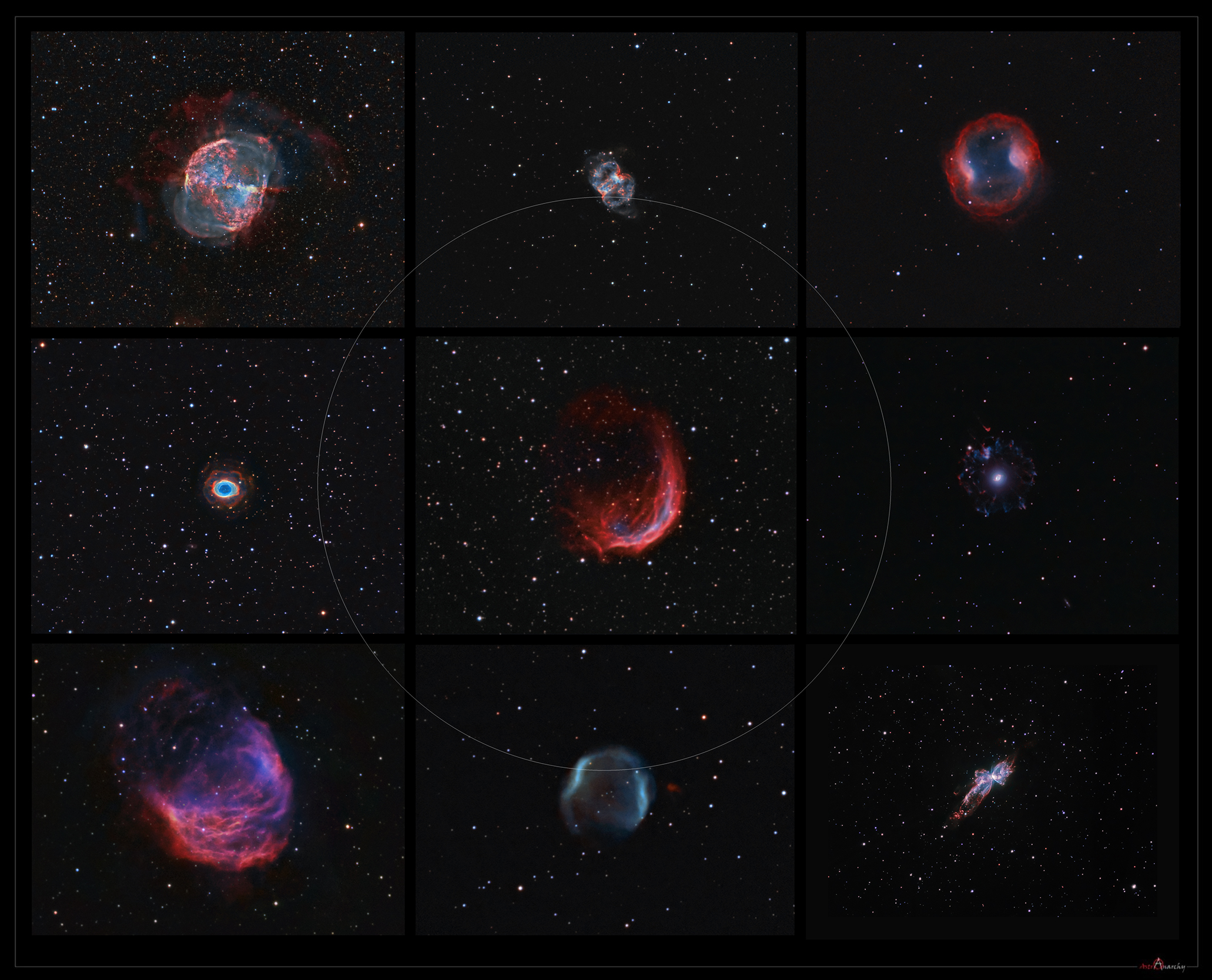
For my final APOD of this quarter I decided to go with something that we have been discussing in class once again and I also found the picture to be quite pleasing to the eyes. Here we see the end of star formation as the planetary nebulae. These gaseous objects are ionized by the extremely hot central core, the shrinking core of a star running out of fuel for nuclear fusion. In this compilation, nine nebulae are displayed for comparison in a 3x3 grid. The planetary nebulae being shown here are the bright Messier objects M27 - the Dumbbell Nebula, M76 - the Little Dumbbell, and M57 - the Ring Nebula, as well as NGC 6543, aka the Cat's Eye Nebula. Lesser known nebulae include the Medusa and the Bug. All the images were made with detailed narrow band data and are shown at the same angular scale, spanning 20 arc minutes (1/3 degree). At that scale, the grey circle represents the apparent size of the Full Moon. These planetary nebulae hint at the fate of our own Sun as its core runs out of nuclear fuel in another 5 billion years.

No comments:
Post a Comment