Pierre Méchain

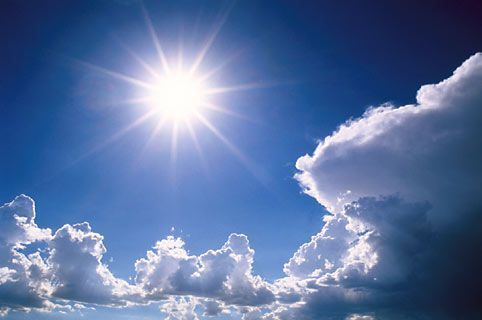
Pierre Méchain was born August 16, 1744 in Laon, France. He was the son of Pierre-François Méchain, who was an architect, and Marie-Marguerite Roze, and early in his life wanted to follow his father in a career in architecture. He studied mathematics and physics, but due to financial difficulties he ended up leaving college. He then became friends with Jérôme de Lalande, who allowed him to proof-read parts of the second edition of his book, L'Astronomie. In 1772, Lalande got Méchain a position as an assistant hydrographer at the Depot of Maps and Charts of the Navy in Versailles. In 1774, Méchain became the calculator with the Depot of the Navy. Then he met Charles Messier, who worked for the same department, but at the smaller observatory at the Hôtel de Clugny. Around this time they became friends and began to work together occasionally. Méchain was first involved in surveys of the French coastline. He also occasionally had to make observations at Versailles. Later in 1774, he observed an occultation of Aldebaran by the Moon, which he later presented as a memoir to the Academy of Sciences. To give one a figure of how big Aldebaran is, imagine our Sun but forty times as wide.
In 1777, Méchain married Barbe-Thérèse Marjou whom he met while working in Versailles. They had two sons: Jérôme, and Augustin, and one daughter who's name I did not find.
Like Messier, Méchain became extremely devoted to comet observing and discovering new ones. He also started to stumble upon nebulous objects, and between 1779 and 1782, discovered a considerable number of thirty deep sky objects, twenty six of which were first discovered by him. He almost instantly discussed his observations with Charles Messier, who usually checked their positions and added them to his catalog. Both astronomers undertook a vigorous effort to find more nebulae between late August 1780 and March 1781, when the manuscript for the final version of the Messier catalog was sent out to print. Méchain's last two contributions, M102 and M103, went into the publication unchecked and without positions. Four other findings missed the publication; these are now known as M104, M105, M106, and M107. He sent them to Bernoulli, the editor of the Berliner Astronomisches Jahrbuch at the time. Since these four objects were not contained in the original Messier catalog, they were attributed separately to Pierre Méchain, John Herschel, and J.L.E. Dreyer. In this same letter, Méchain disclaimed his discovery of M102 as an erroneous re-observation of M101, thereby initiating a still open discussion on the true founder of this object.
In this letter he also mentioned the objects listed in Messier's catalog with M97 which are now recognized as M108 and M109 after their addition proposed by Owen Gingerich. Moreover, Pierre Méchain stated to have observed some more nebulae in the region of the Virgo Cluster which Messier had not included in his catalog, but unfortunately he did not give any credit to Méchain for this discovery.
Méchain discovered his first two comets in 1781, and because of his mathematical skills, he was able to calculate their orbits. In particular, he investigated the orbits of the comets of 1532 and 1661, and disproved the common hypothesis at the time that these were the same object. This work won the Grand Prix of 1782 of the Academy of Sciences, and was the main reason that he became a member of the Academy of Sciences in 1782. During the 1780s, Méchain began numerous surveys to produce maps of Germany and Northern Italy. In 1785, Pierre Méchain became editor of the Connoissance des Temps, the journal which had published the Messier Catalog. Méchain was principle editor of the Connoissance des Temps from 1788 to 1794. In 1787, Méchain collaborated with J.D. Cassini and Legendre on measuring the accurate longitude difference between Paris and Greenwich. At this time all three visited William Herschel at his observatory in Slough, England.
In 1791, Méchain undertook the southern part of a new survey of the meridian from Dunkirk to Barcelona, together with an assistant, Tranchot. The operation began in June 25, 1792, suffering from various obstacles from the French revolution: For example, Méchain and Tranchot got arrested by revolutioneers in Essone, who first mistook their telescopes as weapons, but eventually freed them. Shortly after this, war broke out between France and Spain, and he unfortunately was drafted into the war. Nevertheless, he discovered another comet, his 7th, from Barcelona on January 10, 1793. During the terror regime in Paris, while he was away, all of his property was confiscated, and his family suffered immensely. Once he returned, he became a member of the new Academy of Sciences, and the Bureau of Longitudes. Moreover, he was made director of the Paris Observatory, where he discovered his 8th and last comet on December 26, 1799; he also received help from Messier to find its orbit. Unfortunately shortly after this discovery, Pierre Méchain caught yellow fever and died in Castillion de la Plana in Spain on September 20, 1804.