Monday, November 22, 2010

APOD 2.4


Multiverses: Do Other Universes Exist? (14 Nov. 2010)

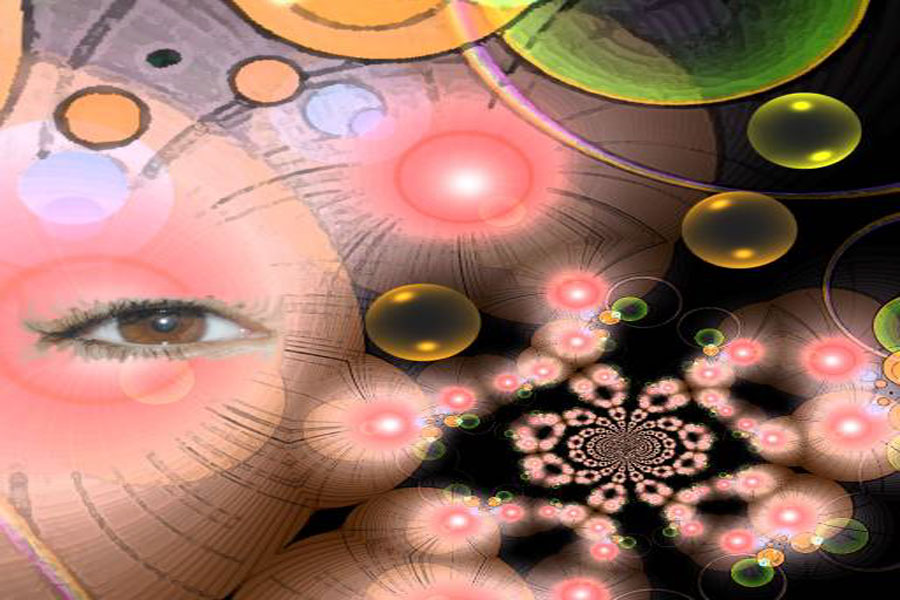
                 If one or more of the several multiverse theories is correct, then it is possible that near exact replicas of ourselves exist in alternate universes. These theories conclude that multiple universes together comprise everything that exists: the entirety of space, time, matter, and energy as well as the physical laws and constants that describe them. The term was coined in 1895 by the American philosopher and psychologist William James. The various universes within the multiverse are sometimes called parallel universes. In the illustration above, universes are represented as independent circles or spheres. Spheres may be disconnected from all other spheres, meaning no communications can pass between them. Some spheres may contain different realizations of our universe, while others may have different physical laws. An entire set of parallel universes is called a multiverse. The human eye might represent the possibility that realizations of some multiverse hypotheses might only exist in the human mind. I personally think these theories though possible, are a bit of a stretch but still very interesting to read up about. Also since we don't have the capabilities to test these hypothesis at the moment, they really don't have much scientific significance.


Friday, November 12, 2010

APOD 2.3


A Fog Bow Over Ocean Beach (2008 May 29)

             In this picture there appeared to be a white arch over the water which I found to be intriguing. The white arch is known as  a fogbow, which is a reflection of sunlight by water drops similar to a rainbow but without the color. The fog itself is not confined to an arch, the fog is mostly transparent and scattered relatively uniformly. The fogbow shape is created by those drops with the best angle to divert sunlight to the observer. The fogbow's general lack of colors are caused by the relatively smaller water drops. The drops active above are so small that the quantum mechanical wavelength of light and diffraction become important and smear out colors that would be created by larger rainbow water drops acting like small prisms reflecting sunlight. The water droplets on average are about 0.05mm and if the fogbow does contain colors, they are usually a very faint red outer edge and a blue inner. 

Wednesday, November 3, 2010

APOD 2.2


The Mysterious Voynich Manuscript (Jan. 31 2010)

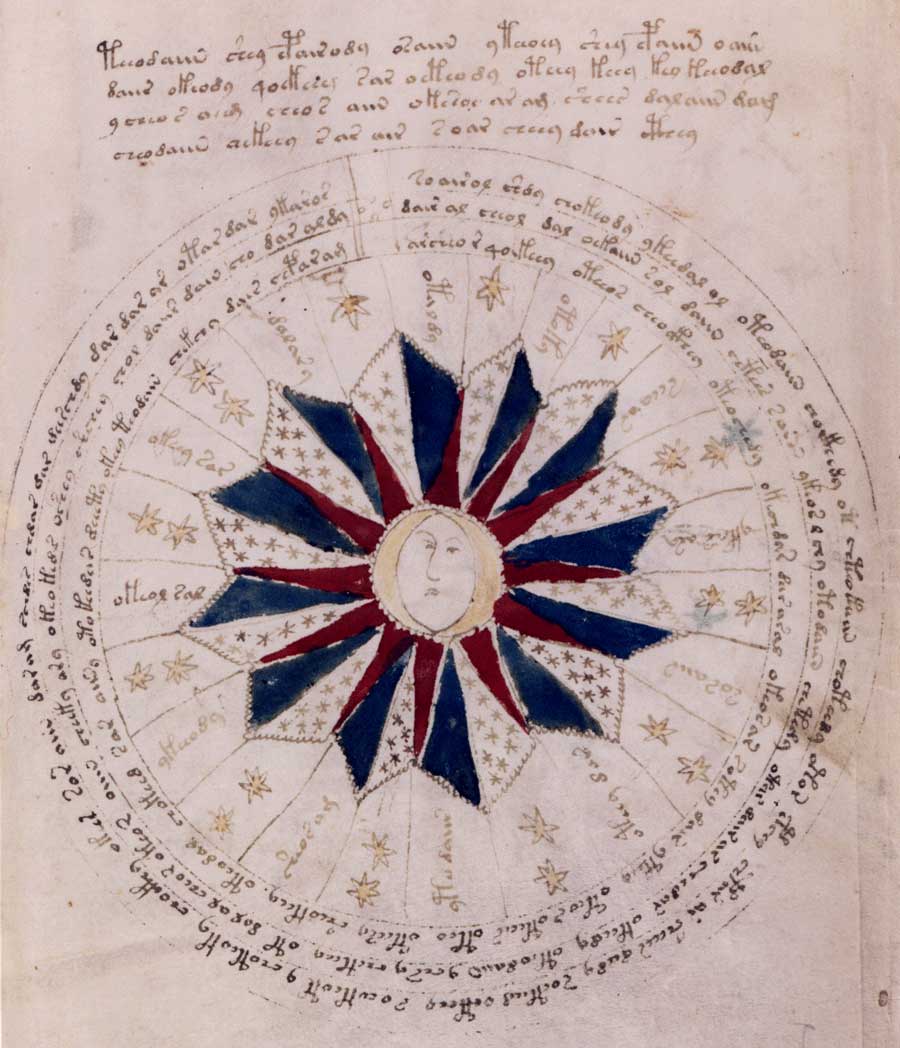
This manuscript was exceptionally intriguing to me because it is an ancient text that has no title, no known author, and is written in no known language. By looking at it though it becomes clear that it does have some sort of astronomical significance. Pictured above is an illustration from the book that appears to be somehow related to the Sun. The book labels some patches of the sky with unfamiliar constellations. The mysterious book was once bought by an emperor, forgotten on a library shelf, sold for thousands of dollars, and later donated to Yale University. Possibly written in the fifteenth century, the over 200-page volume is known most recently as theVoynich Manuscript, after its discovered once again in 1912. Not only are modern historians of astronomy unable to understand the origins of these constellations, modern code-breakers are also unable to understand the book's text.

Observations 3

Wednesday Nov. 3: At  7:15AM  I observed the moon which was in the waning crescent phase. 


I also observed the Summer Triangle in  the northeastern portion of the sky.