Sunday, December 12, 2010

APOD 2.6


Moonrise Through Mauna Kea's Shadow (Dec. 5 2010)

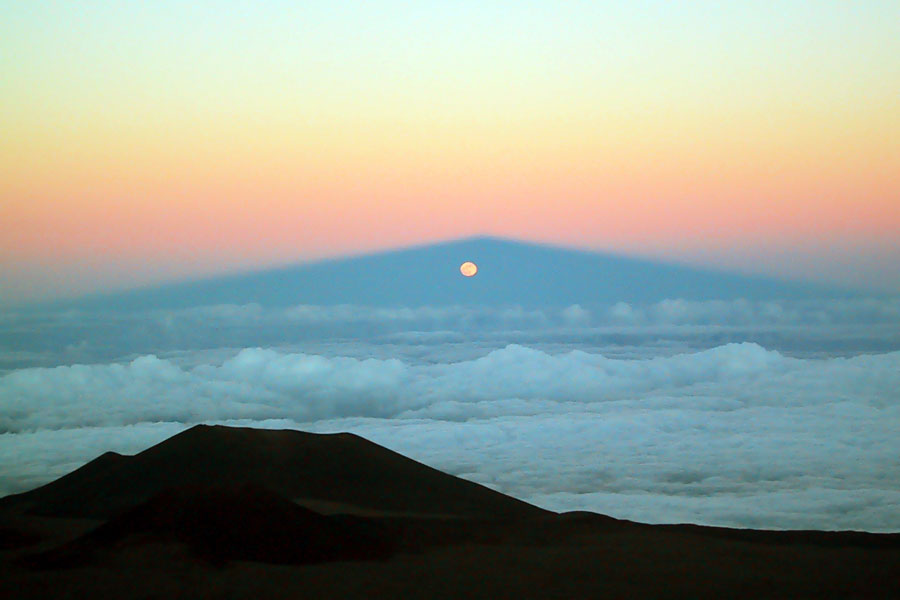
                    Seeing this photo may make one ask, how can the moon be rising in front of a mountain? It cannot, what is happening in this photo is a moon rise through the shadow of a large volcano. The volcano is Mauna Kea in Hawaii, USA, a frequent spot for breathtaking photographs because it is an extraordinary place on Earth for many reasons. The Sun in this photo just set in the opposite direction, behind the camera. Also, the Moon has just passed its full phase, were precisely at its full phase it would rise, possibly eclipsed, at the shadow's peak. Refraction of moonlight through the Earth's atmosphere makes the Moon appear slightly ovular. Steep conically shaped hills of volcanic fragments from old volcanic eruptions are visible in the foreground. Cloud tops below Mauna Kea's summit have unusually flat tops, which indicate a decrease in air moisture that frequently keeps the air unusually dry.

APOD 2.5


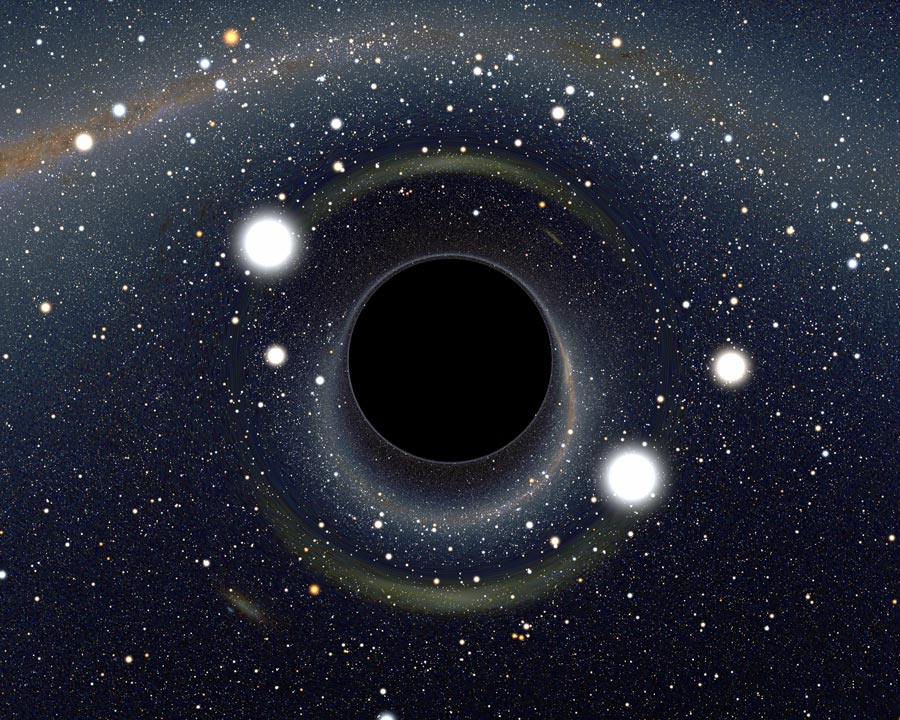
Too Close to a Black Hole (Dec. 7 2010)

            What do you think you would see if you looked directly up to a black hole? Pictured above is a computer generated image modeling how strange it would look. The black hole has such a strong gravitational pull that light actually bent towards it which causes some very unusual visual distortions. Every star in the regular frame has at least two bright images, one on each side of the black hole. Near the black hole, you can see the whole sky because light from every direction is bent around and returns back to you. The original background image was taken from the 2MASS infrared sky survey, including stars from the Henry Draper catalog superposed. Black holes are considered to be the densest state of matter, and there is indirect evidence for their existence in stellar binary systems and the centers of globular clusters, galaxies, and quasars.

Monday, November 22, 2010

APOD 2.4


Multiverses: Do Other Universes Exist? (14 Nov. 2010)

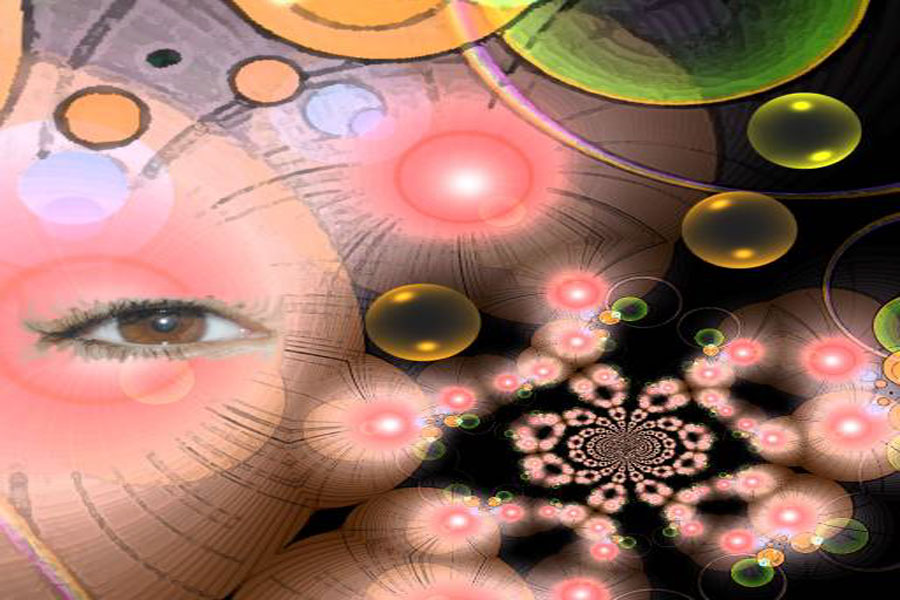
                 If one or more of the several multiverse theories is correct, then it is possible that near exact replicas of ourselves exist in alternate universes. These theories conclude that multiple universes together comprise everything that exists: the entirety of space, time, matter, and energy as well as the physical laws and constants that describe them. The term was coined in 1895 by the American philosopher and psychologist William James. The various universes within the multiverse are sometimes called parallel universes. In the illustration above, universes are represented as independent circles or spheres. Spheres may be disconnected from all other spheres, meaning no communications can pass between them. Some spheres may contain different realizations of our universe, while others may have different physical laws. An entire set of parallel universes is called a multiverse. The human eye might represent the possibility that realizations of some multiverse hypotheses might only exist in the human mind. I personally think these theories though possible, are a bit of a stretch but still very interesting to read up about. Also since we don't have the capabilities to test these hypothesis at the moment, they really don't have much scientific significance.

Friday, November 12, 2010

APOD 2.3


A Fog Bow Over Ocean Beach (2008 May 29)

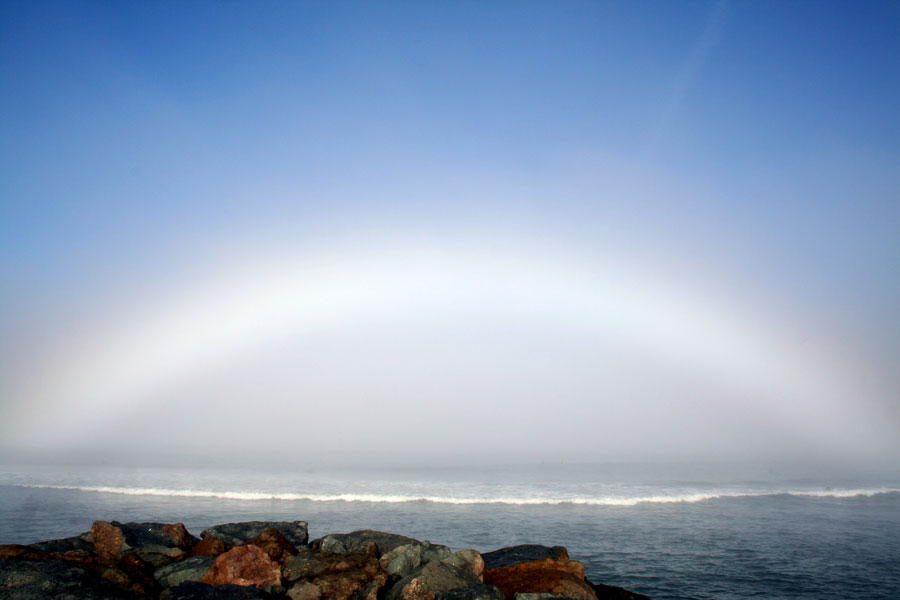
             In this picture there appeared to be a white arch over the water which I found to be intriguing. The white arch is known as  a fogbow, which is a reflection of sunlight by water drops similar to a rainbow but without the color. The fog itself is not confined to an arch, the fog is mostly transparent and scattered relatively uniformly. The fogbow shape is created by those drops with the best angle to divert sunlight to the observer. The fogbow's general lack of colors are caused by the relatively smaller water drops. The drops active above are so small that the quantum mechanical wavelength of light and diffraction become important and smear out colors that would be created by larger rainbow water drops acting like small prisms reflecting sunlight. The water droplets on average are about 0.05mm and if the fogbow does contain colors, they are usually a very faint red outer edge and a blue inner. 

Wednesday, November 3, 2010

APOD 2.2


The Mysterious Voynich Manuscript (Jan. 31 2010)

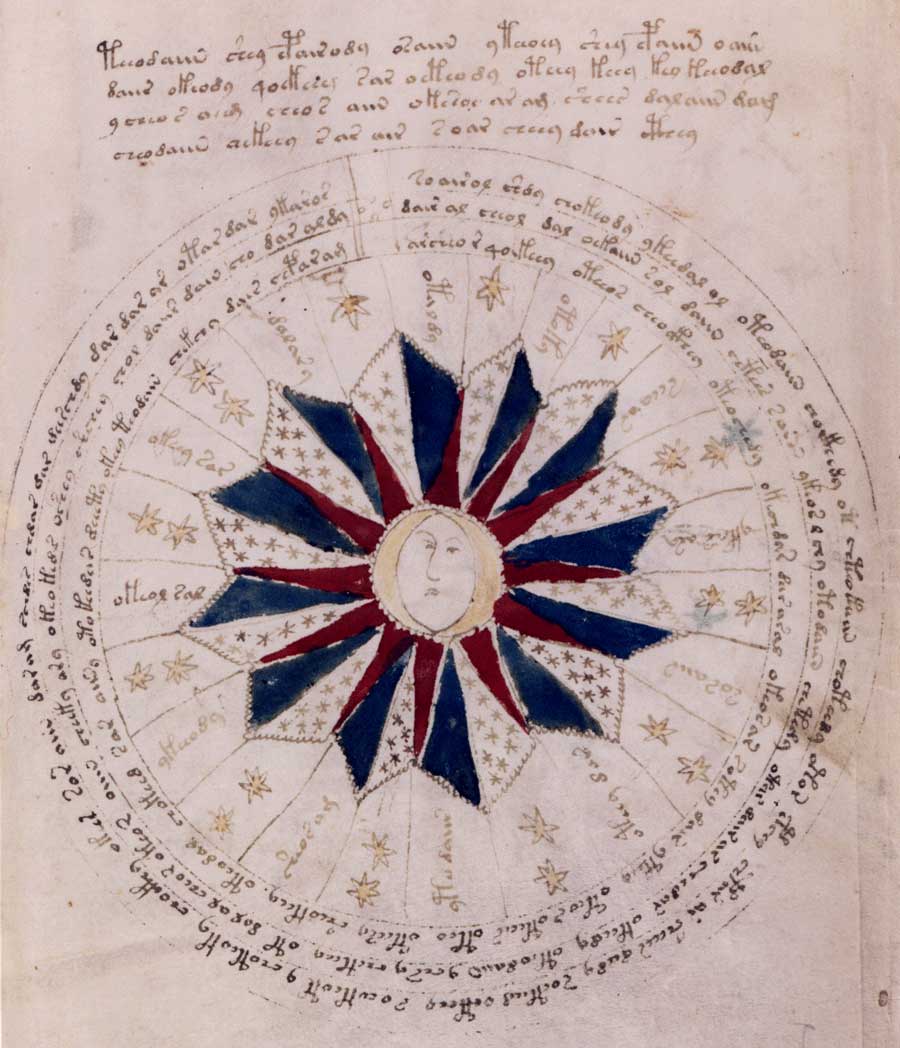
This manuscript was exceptionally intriguing to me because it is an ancient text that has no title, no known author, and is written in no known language. By looking at it though it becomes clear that it does have some sort of astronomical significance. Pictured above is an illustration from the book that appears to be somehow related to the Sun. The book labels some patches of the sky with unfamiliar constellations. The mysterious book was once bought by an emperor, forgotten on a library shelf, sold for thousands of dollars, and later donated to Yale University. Possibly written in the fifteenth century, the over 200-page volume is known most recently as theVoynich Manuscript, after its discovered once again in 1912. Not only are modern historians of astronomy unable to understand the origins of these constellations, modern code-breakers are also unable to understand the book's text.

Observations 3

Wednesday Nov. 3: At  7:15AM  I observed the moon which was in the waning crescent phase. 


I also observed the Summer Triangle in  the northeastern portion of the sky.

Thursday, October 28, 2010

APOD 2.1


M57: The Ring Nebula (Nov. 15 2009)

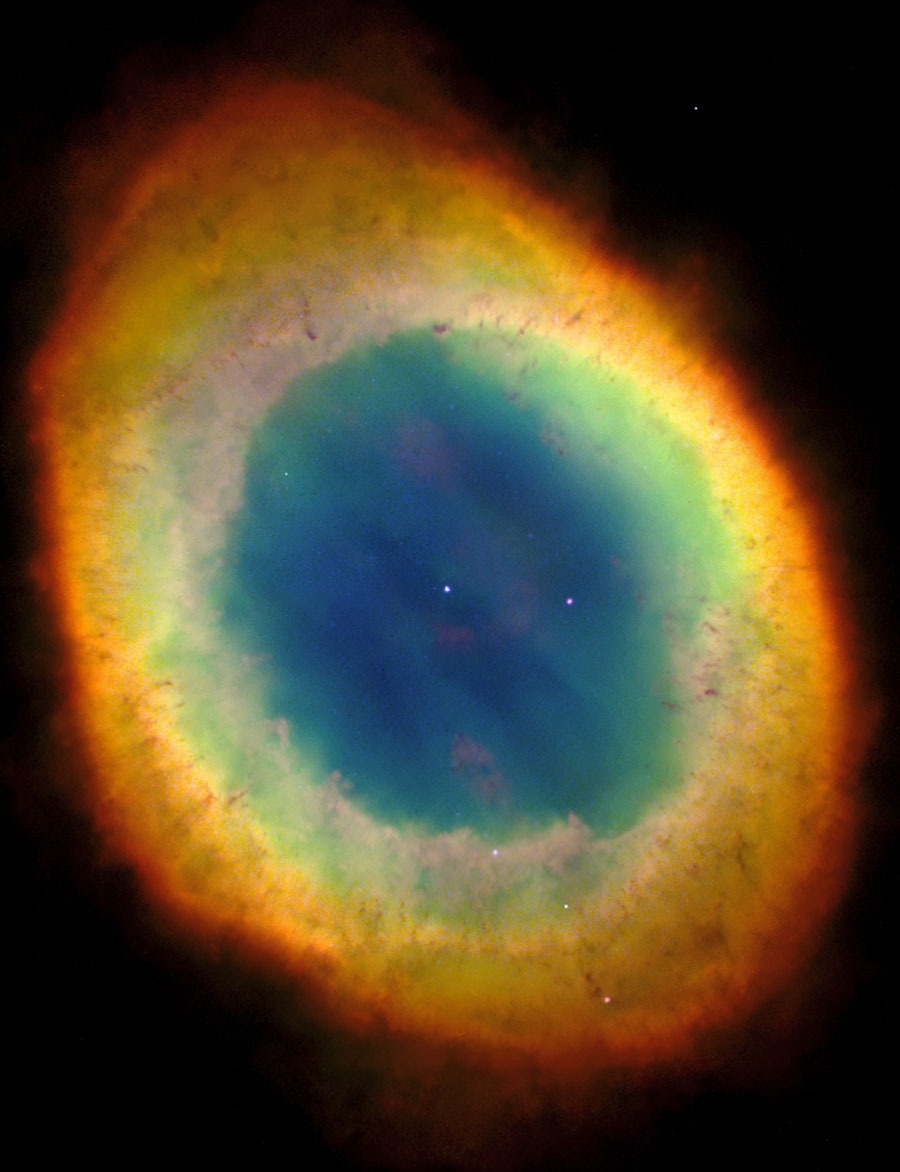
           M57, the Ring Nebula, looks to most astronomers like a ring in the sky hence its name. I agree with that statement but I personally think it looks more like some sort of geothermal spring in which the color comes from pigmented bacteria which strive in the mineral rich water. It is now known to be a planetary nebula which is a gas cloud emitted at the end of a Sun-like star's existence. As one of the brightest planetary nebula on the sky, the Ring Nebula can be seen with a small telescope in the constellation of Lyra. The Ring Nebula is about 4,000 light years away, and is nearly 500 times the diameter of our Solar System. In this picture taken by the Hubble Space Telescope in 1998, dust filaments and globules are visible far from the central star. This helps indicate that the Ring Nebula is not spherical, but cylindrical.

Friday, October 22, 2010

APOD 1.8


Rigel and the Witch Head Nebula (Dec. 29 2009)

I found this nebula to be interesting and whimsical because like its name, the Witch Head Nebula, it really does look like a witches' head. It is a reflection nebula which are clouds of dust that are simply reflecting the light of a near by star, in this case, the star is Rigel. Rigel is the brightest star in the constellation Orion and the sixth brightest star in the sky. Fine dust in the nebula reflects the light. Pictured above, the blue color of the Witch Head Nebula and of the dust surrounding Rigel is caused not only by Rigel's blue color but because the dust grains reflect blue light more efficiently than red. The same physical process causes Earth's daytime sky to appear blue, although the scatterers in Earth's atmosphere are molecules of nitrogen and oxygen. Rigel, the Witch Head Nebula, and gas and dust that surrounds them lie about 800 light-years away. The Witch Head Nebula is also known as IC 2118.

Friday, October 15, 2010

Ole Roemer Bio

                Ole Roemer was a Danish astronomer who was born in Arhus, Denmark on Sept. 25 1644. He first enrolled in the University of Copenhagen in 1662, in which he had a mentor, Rasmus Bartholin, who published his discovery of the double refraction of a light ray by Iceland spar in 1668 while Roemer was living in his home. Roemer was given endless opportunities to learn mathematics and astronomy using Tycho Brahe's astronomical observations, since Bartholin had been given the responsibility of preparing them for publication. 
                In 1681, Roemer returned to Denmark and was appointed professor of astronomy at the University of Copenhagen, and the same year he married Anne Marie Bartholin, Rasmus' daughter. He was an active observer, both at the University Observatory at RundetÃ¥rn and in his home, using improved instruments of his own construction. Unfortunately, his observations did not survive because they were lost in the great Copenhagen Fire of 1728 which was the largest fire in the history of Copenhagen. Luckily his assistant, Peder Horrebow, loyally described and wrote about Roemer's observations.
              While Roemer held the position of royal mathematician, he introduced the first national system for weights and measures in Denmark on May 1 1683. Initially based on the Rhine foot, a more accurate national standard was adopted in 1698. Soon after this in 1700 Roemer managed to get the king to introduce the Gregorian Calender in Denmark and Norway, something that Tyco Brahe unsuccessfully argued decades ago. Roemer also developed one of the first temperature scales. Fahrenheit visited him in 1708 and improved on the Rømer scale, the result being the familiar Fahrenheit temperature scale which is still used today in some countries. Roemer also established numerous navigation schools in Danish cities. In 1705, Roemer was made the second Chief of the Copenhagen Police, a position he kept until his death in 1710. As one of his first acts, he fired the entire force, because he was convinced that the morale was alarmingly low. He was also the inventor of the first street lights in Copenhagen, and maintained social order within. This was the start of a social reform. In Copenhagen, Roemer made rules for building new houses, got the city's water supply and sewers back in order, ensured that the city's fire department got new and better equipment, and was the moving force behind the planning and making of new pavement in the streets and on the city squares.
            Among all of Ole Roemer's accomplishments and contributions to his city, his most noted achievement was being the first person to quantify the speed of light. By 1675 Roemer was 31 and working in Paris with Jean Picard. He was interested in the movement of Jupiter's nearest moon. He tracked it as it orbited in and out of Jupiter's shadow. It entered the shadow, then reemerged 42 hours, 28 minutes, and 35 seconds later. It moved with metronomic regularity. In one hundred transits, Jupiter's moon could be relied on to emerge once more, right on schedule. Six months and 100 laps later, Roemer set his clock and focused his telescope on Jupiter. Minutes passed but there was no moon for him to observe. About 15 minutes later Roemer presumably theorized what was happening. Earth had swung hundreds of millions of miles away from Jupiter during the long winter months. Light had to travel that vast distance. It'd obviously taken the extra time to do so. He put pencil to paper and concluded that light had to move 192,500 miles per second to lose just fifteen minutes. Roemer was within three percent of the right value. Which was only about 70 years after telescopes made it onto the scene. 
             Overall it is apparent that Ole Roemer had an impressive impact on not only his own community and society but for the rest of the world up to the present. His achievements have earned him much recognition and awards such as a plaque at the Observatory of Paris which commemorates what was, in effect, the first measurement of a universal quantity made on this planet. There is also an Ole Roemer Museum on the island of Zealand in Denmark which contains the works and observations of Roemer and contains a large collection of ancient and more recent astronomical instruments.


Thursday, October 14, 2010

APOD 1.7


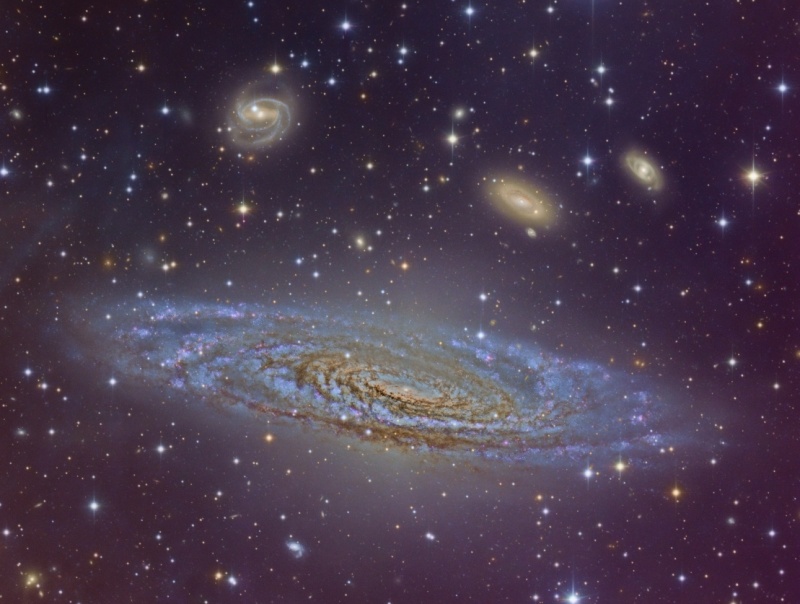
NGC 7331 (Oct. 22, 2010)

            This big beautiful spiral galaxy, NGC 7331, is a target for astronomers and is one of the brighter galaxies not found in Charles Messier's famous eighteenth century catalog. About fifty million light-years distant in the northern constellation Pegasus and similar in size to our own Milky Way Galaxy, NGC 7331 is often imaged as the foundation of a visual grouping that includes an intriguing assortment of background galaxies about ten times farther away. This astounding image of the well-studied island universe and environs was created by using data from the Calar Alto Observatory in southern Spain. Perhaps the deepest view of the region yet, the image data were processed to reveal sharp details of all sizes in both bright and faint areas. A color balance was chosen so that white would be the result of averaging colors over the entire galaxy. The result shows off a numerous amount of remarkable features in NGC 7331 and its surroundings.

Friday, October 8, 2010

APOD 1.6

http://apod.nasa.gov/apod/ap101002.html


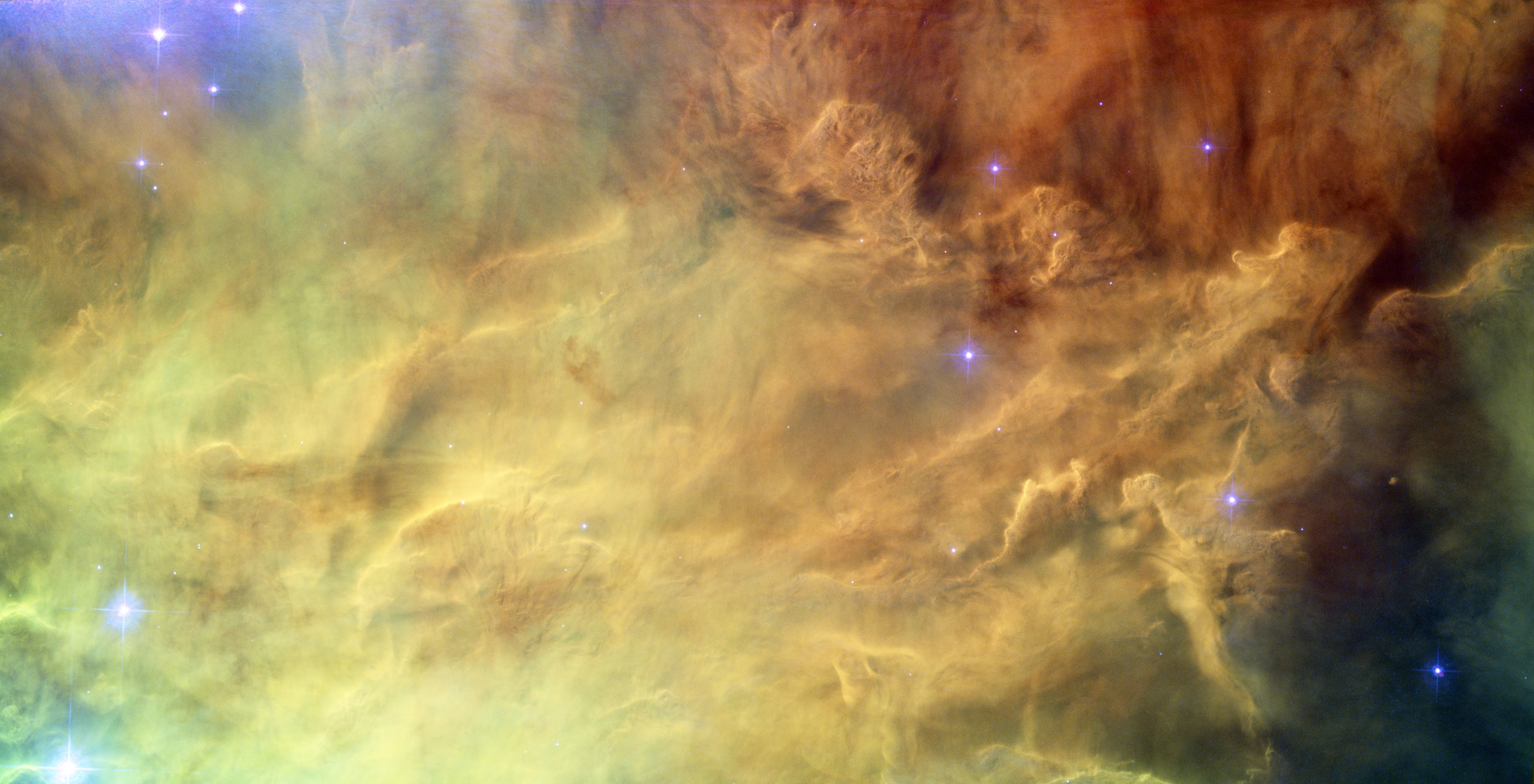
Hubble's Lagoon (Oct. 2, 2010)
  
This image is of M8, or the Lagoon Nebula. As stated in the article, the dust clouds appear as brush strokes on a canvas except in this case, the canvas is nearly three light years wide. The colors map emission from ionized gas and was recorded by the Hubble Telescope's Advanced Camera For Surveys. The Lagoon Nebula is a star forming region about five thousand light years distant from Sagittarius. This sharp and close up view is remarkable because it allows us to see undulating shapes sculpted by the energetic light and winds from the region's new born stars. It becomes apparent to me that the Lagoon nebula is a popular target for earthbound sky gazers, too. This is because it features a prominent dust lane and bright hourglass shape in small telescopes with wider fields of view.

Observations 2

Monday (Oct. 4, 2010):  At 8:10 PM I observed an iridium flare NNE in the sky.

Tuesday (Oct. 5, 2010): At 8:05 PM I observed another iridium flare NNE in the sky.


Thursday (Oct, 7 2010): At 7:10 AM I observed the New Moon in the North.


Friday, October 1, 2010

APOD 1.5


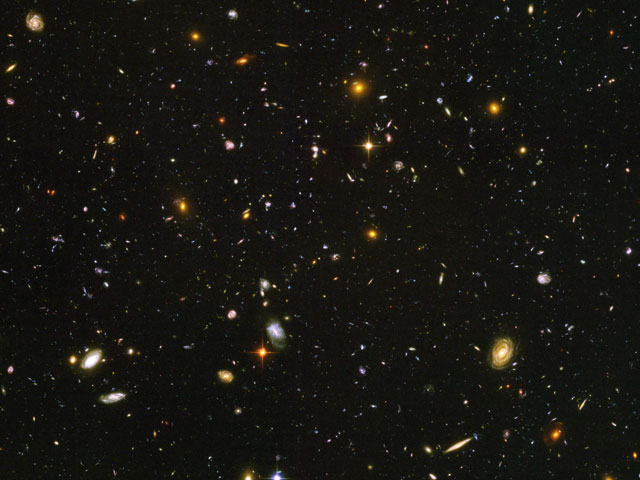
The Hubble Ultra Deep Field (March 9, 2004)

The image above was taken by the Hubble Ultra Deep Field (HUDF) and it it is the deepest portrait of the visible universe ever achieved by humankind. the million-second-long exposure shows the first galaxies that emerged from the so called "dark ages," which was the time shortly after the big bang when the first stars reheated the cold, dark universe. This "dark age" was about thirteen billion years ago, which is only five percent of its current age. The image is actually two separate images taken by Hubble's Advanced Camera for Surveys and the Near Infrared Camera and Multi-object Spectrometer. After staring for about three months at the same spot, this new HUDF is four times more sensitive in most colors than the original Hubble Deep Field (HDF). This is extremely interesting because scientists have had the ability to study this image for years now and come up with better ways to understand how stars and galaxies formed in the earlier universe. 


Thursday, September 30, 2010

Ole Roemer

Ole Roemer

Soter, Steven. “Ole Roemer and the Speed of Light.” American Museum of Natural History. Web. 30 Sept.                                          2010. (http://www.amnh.org/education/resources/rfl/web
essay books/cosmic/p_roemer.html)

“Ole Roemer.” 1911 Encyclopedia Britannica. Web. 01 Oct. 2010. (http://www.1911
Encyclopedia.org/ole_roemer)

Friday, September 24, 2010

APOD 1.4

http://apod.nasa.gov/apod/ap050425.html


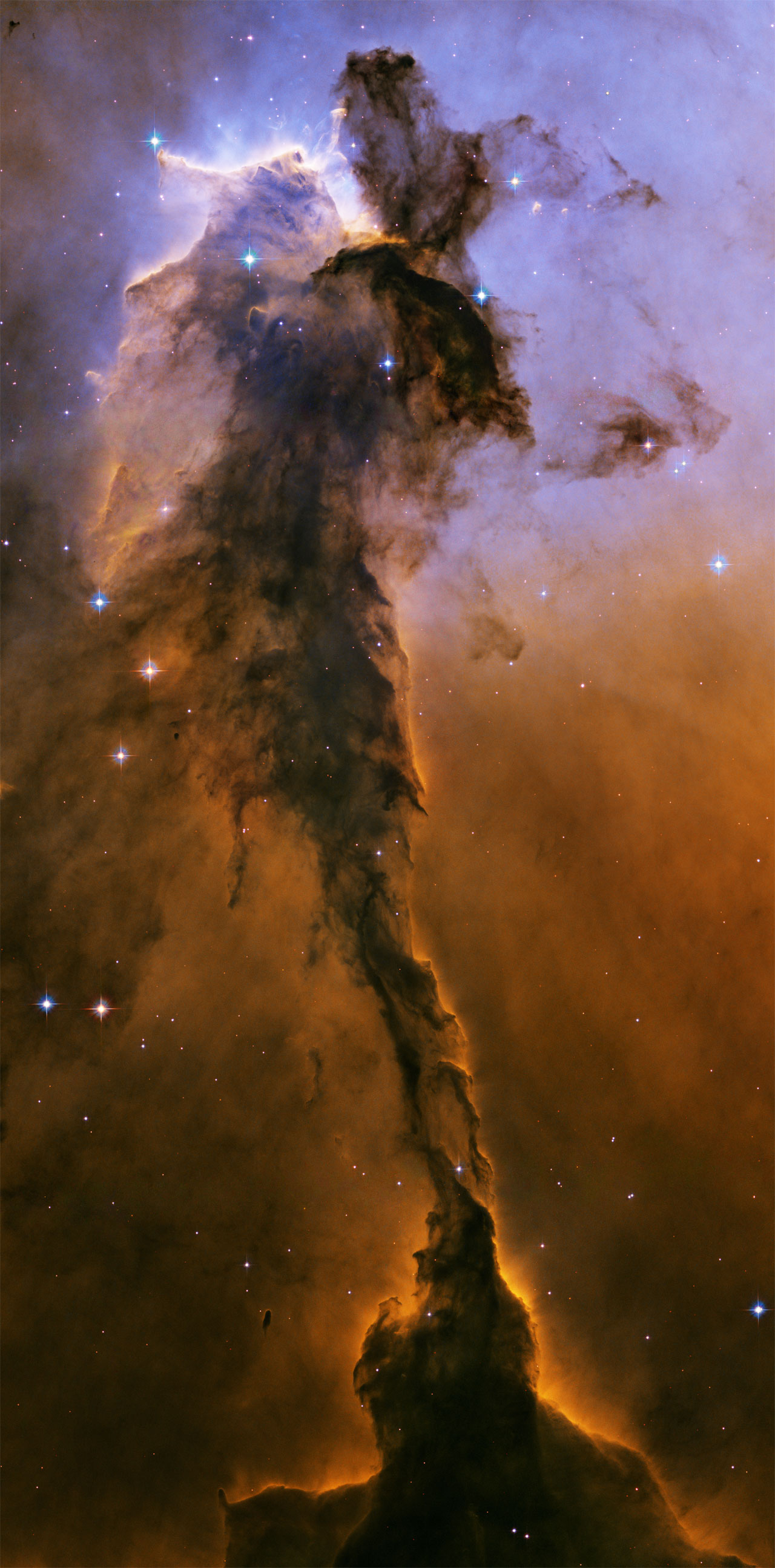
The Fairy of Eagle Nebula (April 25, 2005)

                    This is one of several striking dust pillars of the Eagle Nebula that seems to be a gigantic alien fairy. The dust sculptures of the Eagle Nebula are in the stages evaporating. Since powerful starlight whittles away these cool cosmic mountains, the statuesque pillars that remain can be imagined as mythical beasts or something of that sort... use your imagination. This fairy, however, is ten light years tall and spews radiation much hotter than the common fire we experience. The greater Eagle Nebula, M16, is a massive evaporating shell of gas and dust inside of which is a growing cavity filled with a spectacular stellar nursery currently forming an open cluster of stars. This image was developed in scientifically re-assigned colors and was released as celebration for the 15th year anniversary of the Hubble Telescope.

Wednesday, September 22, 2010

Observations 1

Monday (9/20) - Around about 9:00 PM I observed that Jupiter was rising in the east near the moon


Tuesday (9/21) - Also at about 9:00 PM I observed that the moon was in the east and Venus was in

the west.


Wednesday (9/22) - The moon is a full moon today. There is also minimum serperation between the

moon and Jupiter which is about 3 degrees.

Thursday, September 16, 2010

APOD 1.3


The Elusive Jellyfish Nebula (May 15, 2010)

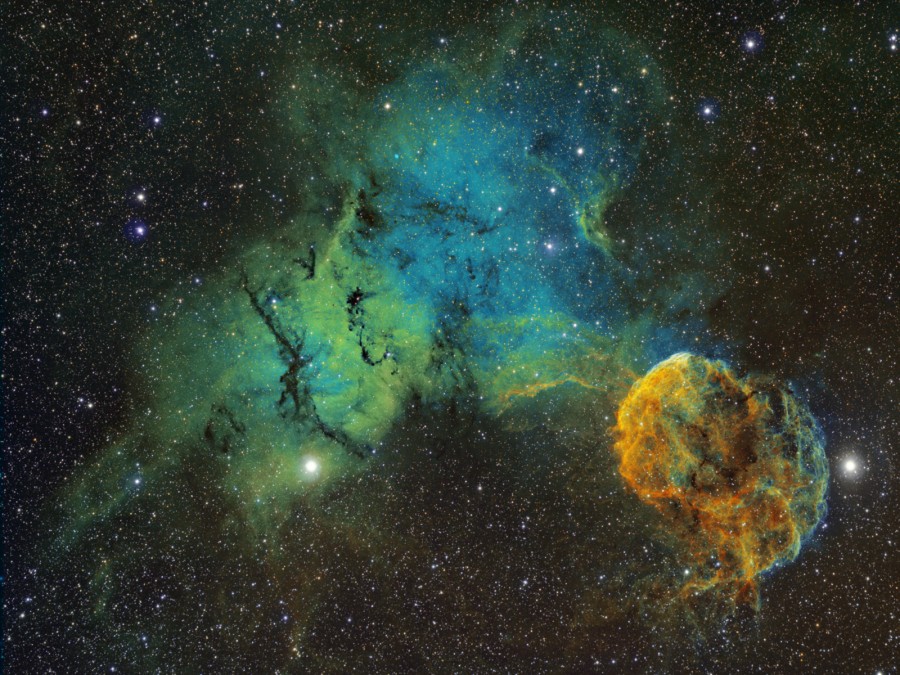
                      In this picture the colors have been enhanced to make the nebula more noticeable which I found interesting because the Jellyfish Nebula is rather faint and elusive in reality. Flanked by two bright stars, Mu and Eta Geminorum, at the foot of a celestial twin, the Jellyfish Nebula is the brighter arcing ridge of emission with dangling tentacles below and right of center. It is also interesting that the cosmic jellyfish is seen to be part of bubble-shaped supernova remnant IC 443, the expanding debris cloud from a massive star that exploded. Light from the explosion first reached planet Earth over 30,000 years ago. Like its cousin in astrophysical waters the Crab Nebula supernova remnant, IC 443 is known to harbor a neutron star, the remnant of the collapsed stellar core. Emission nebula Sharpless 249 fills the field at the upper left. The Jellyfish Nebula is about 5,000 light-years away. At that distance, this image would be about 300 light-years across. The color scheme used in the narrowband composite was made popular in Hubble Space Telescope images, mapping emission from oxygen, hydrogen, and sulfur atoms to blue, green and red colors.

Friday, September 10, 2010

APOD 1.2


The Tarantula Zone (Sept 1, 2009)

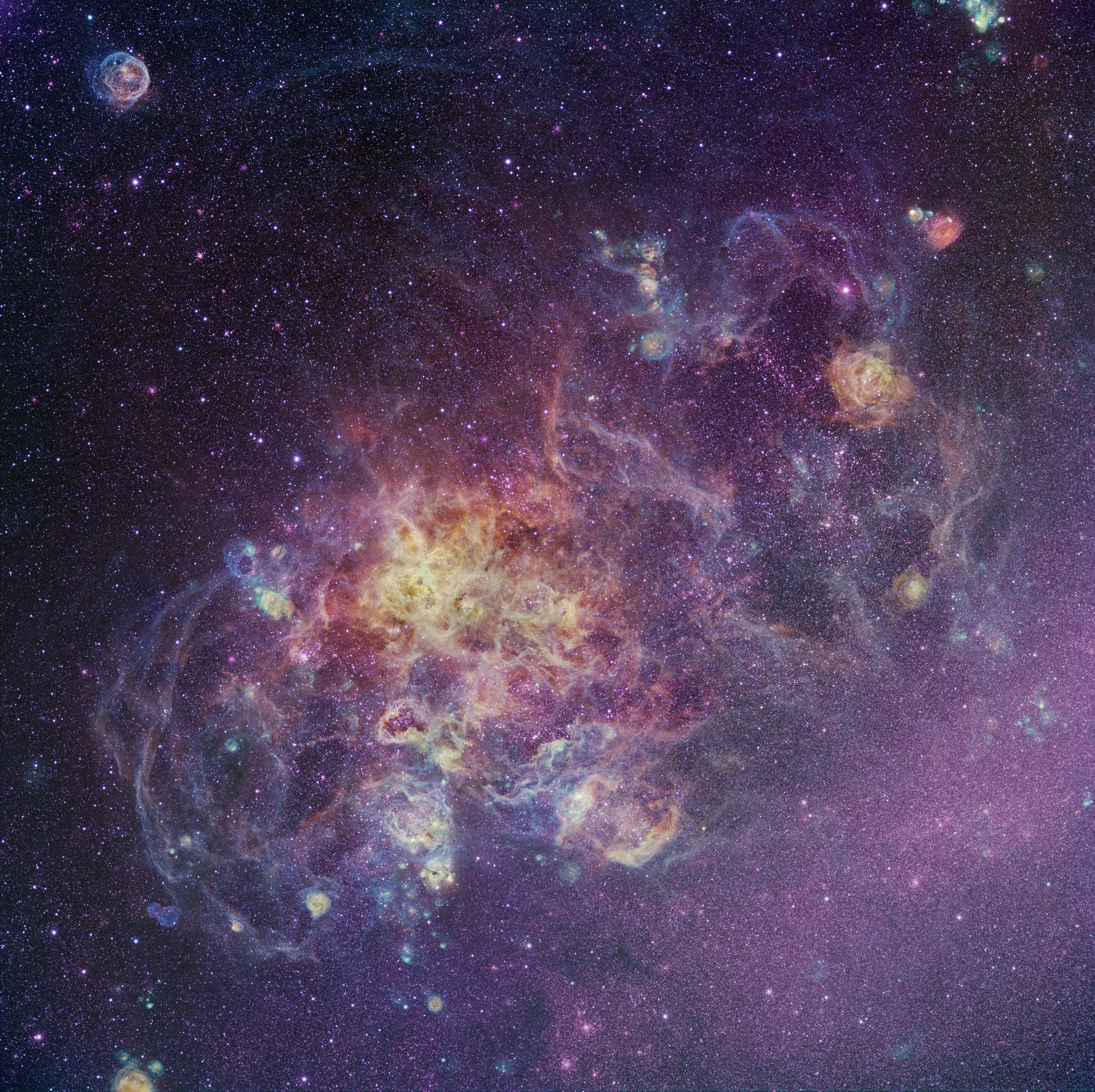
              The Tarantula Nebula is a giant (more than 1,000 light years in diameter) star forming region within our nieghboring galaxy the Large Magellanic Cloud. Within the Tarantula, intense radiation, stellar winds and supernova shocks from the central young cluster of massive stars, cataloged as R136, energize the nebular glow and shape the spidery filaments. Around the Tarantula are other violent star-forming regions with young star clusters, filaments and bubble-shaped clouds. The rich field is about as wide as the full Moon on the sky, located in the southern constellation Dorado.  It was recognized to be a nebula by Abbe Lacaille on December 5, 1751.

Right Ascension 05 : 38.7 (h:m)

Declination -69 : 06 (deg:m)


Distance 179.0 (kly)


Visual Brightness 8 (mag)


Apparent Dimension 40 x 25 (arc min)

Monday, September 6, 2010

APOD 1.1


The Antennae Galaxies in Collision (July18, 2010)


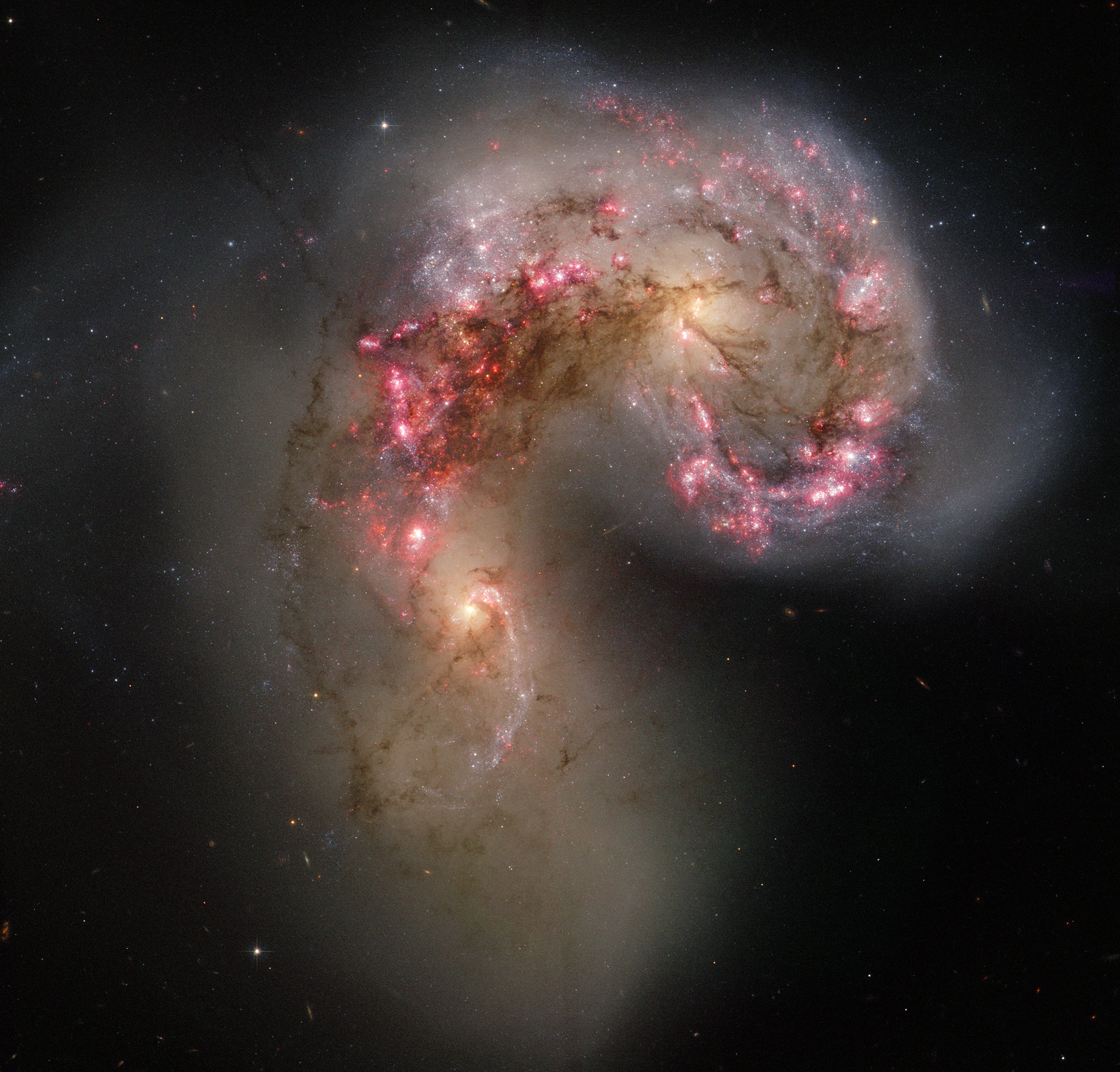
        The two galaxies are squaring off in Corvus which is a constellation in the southern hemisphere that is named for the crow, a bird associated with Apollo. It looks nothing like a crow but was named this because it was near the constellation Hydra. The probability of two stars within the galaxies colliding is almost 0. This is because even though there are an incredibly large number of stars in the galaxies, the density of stars is not very big since the galaxies are extremely big. In other words, the sizes of the stars are very small compared to the average distance between them. What can happen is that the large quantities of dust and gas within the galaxies can interact gravitationally. Also the galaxies can pull on the material in the other galaxies and disrupt their morphologies. There is also friction between the gas in the colliding galaxies, causing shock waves that can trigger some star formation in the galaxies. For example, two spiral galaxies can merge to form an elliptical galaxy.