Tuesday, May 31, 2011

APOD 4.6

http://apod.nasa.gov/apod/ap110528.html


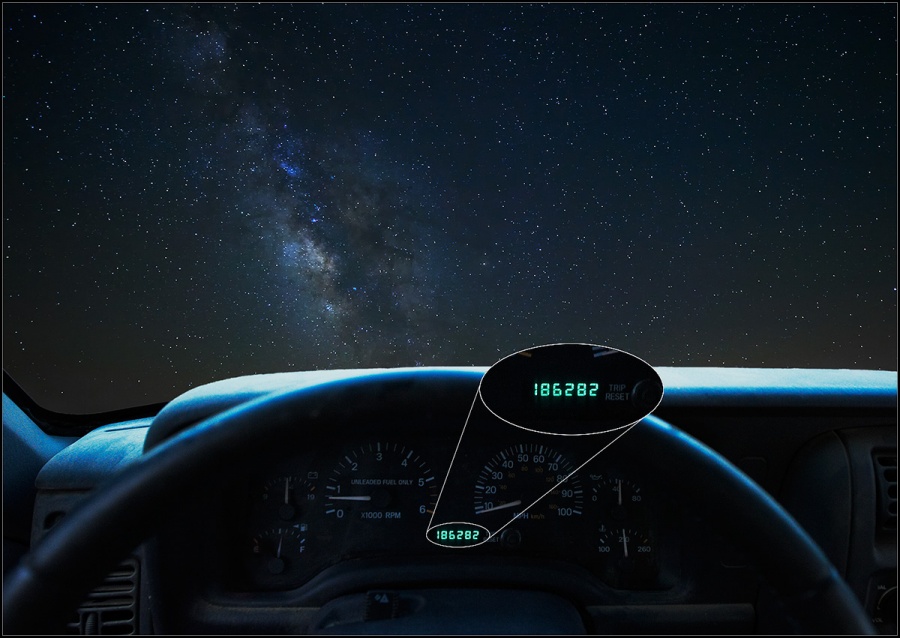
The Mileage of Light (May 28 2011)

            While driving, the astronomer Dennis Mammana looked at his odometer and realized that it read 186,282 miles. If you don't already know, this is the number of miles light travels in one second. In Dennis' case, it took him about thirteen years to travel this distance. I thought that this was a good example of just how quickly light travels and how much the quantities within our universe vary from the smallest molecule to the largest super-massive black holes and so on. This also gives me an idea of how truly vast and extensive the universe is considering that some of the objects in the sky that we can observe don't exist anymore but the light is just reaching us. If it took light a long time to travel that distance, I don't even want to know how truly far away those objects are. I can not fathom it even if you put a number on it.

Friday, May 20, 2011

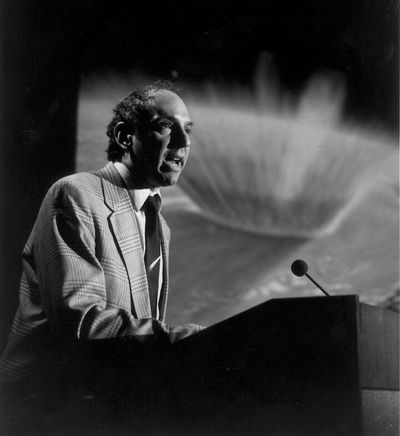
Biography - David Levy


          David Levy is not only an astronomer but he is also a writer in the areas of science. Levy 
was born in MontrealQuebecCanada, on May 22, 1948. Despite having an interest in astronomy from an early age, he pursued and received bachelor’s and master’s degrees in English 
literature. In 1967 he almost got expelled from the Royal Astronomical Society of Canada's 
Montreal Centre after an argument with some members of its administration. "Levy will never 
amount to anything," one senior official of the RASC remarked in 1968. Years later, Levy began 
a correspondence with Isabel Williamson, the one that he started the quibble with. These 
letters turned into visits, the presentation of the National Service Award to Miss Williamson, and 
the naming of the Montreal Centre's Observatory after her. Levy went on to discover 22 comets, whether it was him alone or with her is uncertain. He has written 34 books, mostly on astronomical subjects, such as The Quest for Comets and his tribute to Gene Shoemaker in Shoemaker by Levy. He has provided periodic articles for Sky and Telescope magazine, as well as Parade MagazineSky News and Astronomy Magazine.
Periodic comets that Levy co-discovered include 118P/Shoemaker-Levy129P/Shoemaker-Levy, 135P/Shoemaker-Levy, 137P/Shoemaker-Levy, 138P/Shoemaker-Levy, 145P/Shoemaker-Levy, and 181P/Shoemaker-Levy. Levy is the sole discoverer of two periodic comets P/1991 L3 and P/2006T1. He was also the first to discover comets visually, photographically , and electronically, which I think is quite the impressive feat!
On February 28, 2010, Levy was awarded a Ph. D. from the Hebrew University of Jerusalem for his successful completion of his thesis "The Sky in Early Modern English Literature: A Study of Allusions to Celestial Events in Elizabethan and Jacobean Writing, 1572-1620."
At this point in his life, Levy lives in Vail, Arizona and is married to Wendee Levy. Levy and his wife host a weekly internet radio talk show on astronomy. Along with this he is also President of the National Sharing the Sky Foundation which seeks to promote intelligent awareness of astronomy and related sciences.

Friday, May 6, 2011

Zooniverse Update

Transits, transits, transits... one box surrounding one after another. Thats basically all there is to this project. You select the shape the star has, the variance of its pulses, and check for transits.

APOD 4.5

http://apod.nasa.gov/apod/ap110502.html


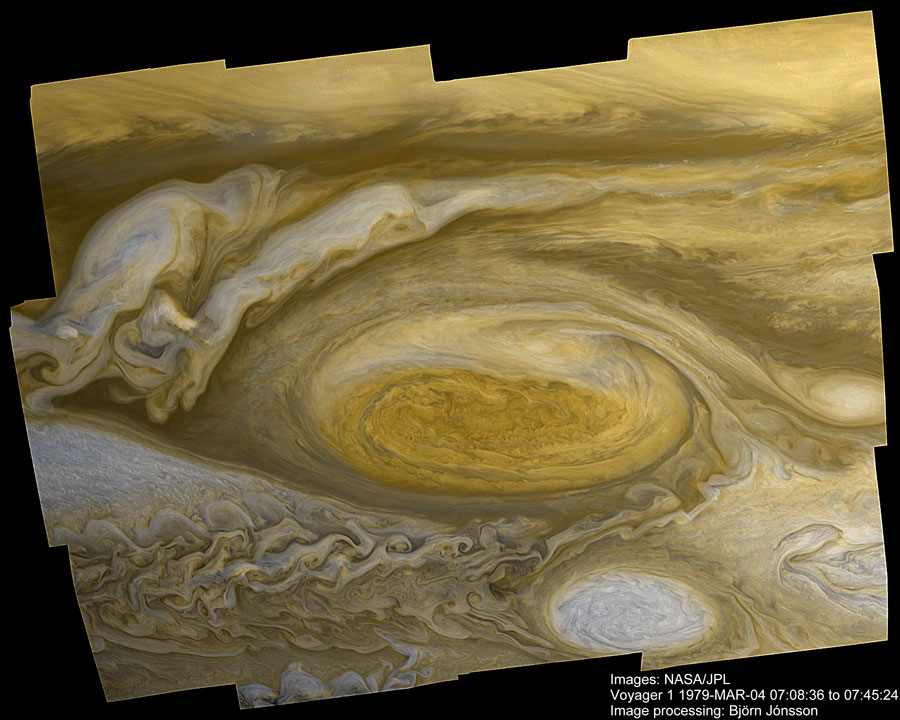
Jupiter's Great Red Spot from Voyager 1 (6 May 2011)

                Going on as long as we have had the capabilities of viewing Jupiter' s surface is a storm that is twice the size of Earth. In regards to our Solar System it is the largest storm of its sort. The spot was a sort of mystery directly after its discovery and still to this day details of how and why the storm changes its shape, color and size remain uncertain. The best way to understand its properties would be to compare it to the storms right here on Earth. The above image is a recently completed digital enhancement of an image of Jupiter taken in 1979 by the Voyager 1 spacecraft as it passed by Jupiter. At about 117AU from Earth, Voyager 1 is currently the most distant human made object in the universe and expected to leave the entire solar heliosheath relatively soon.

Tuesday, May 3, 2011

Zooniverse Update

As I have been working on the Planet Hunters project on Zooniverse, one thing has stood out to me that I particularly enjoy. This is the fact that once you locate what you believe are the transit features of the star, you can compare you results with those all over the globe and even enter a forum in which anyone participating can discuss their results and come a to a similar conclusion. I feel that this is helpful to anybody from a beginner like me to those more affluent with the subject because it creates areas of interest for any one person.

APOD 4.4

http://apod.nasa.gov/apod/ap110424.html


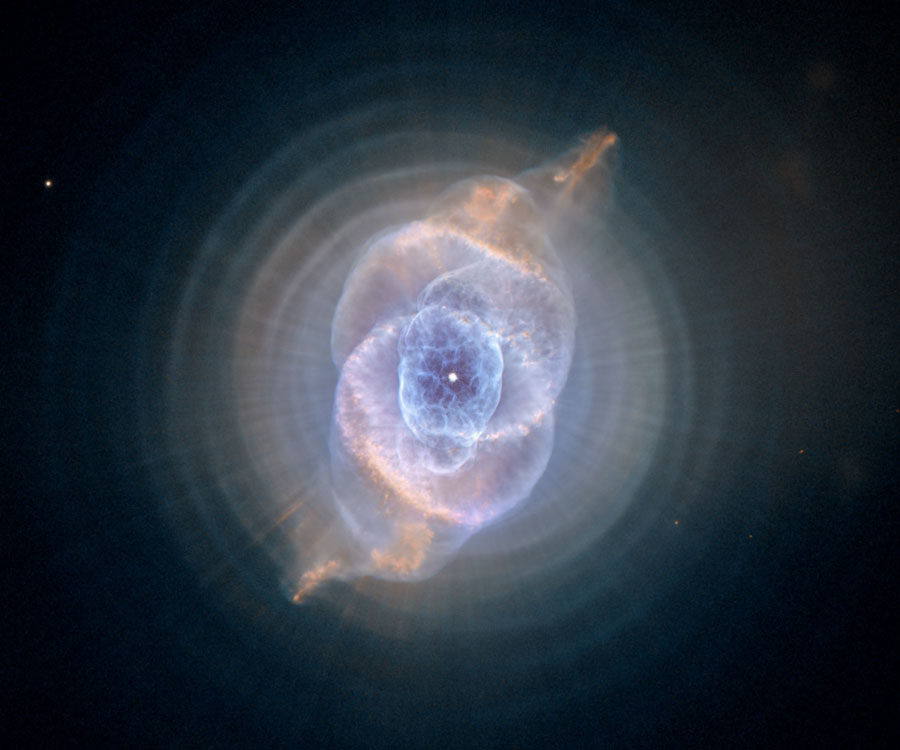
The Cat's Eye Nebula from Hubble (May 2 2011)

              For this APOD I went with probably my all time favorite Nebula, The Cat's Eye Nebula. The Cat's Eye Nebula lies about three thousand light years away from Earth. The phase of this nebula represents a final, brief but still impressive phase in the lifespan of a sun-like star. The nebula's withering central star may have produced the simple, outer pattern of dusty concentric figures by pushing away outer layers in a series of regular intervals. But the formation of the  more complex inner structures is not well understood. In this high resolution image produced by the Hubble Telescope, the Cat's Eye is about a half a light year across. This is such a huge distance which I believe that I will never have the opportunity of comprehending but in the grand scheme of things, it is minuscule. Astronomers believe that our sun will be in a similar phase as this one s currently in in about 5 billion years!

Friday, April 29, 2011

Zooniverse Update

So I got bored with the Hubble Project and have moved on to a new project once again. This one is titled Planet Hunters. With this project you are presented with information from the Kepler mission which uses the transit technique to detect exoplanets: terrestrial and larger planets orbiting other stars. With this method, planets that pass in front of their host stars block out some of the starlight causing the star to dim slightly for a few hours. The Kepler spacecraft stares at a field of stars in the Cygnus constellation and records the brightness of those stars every thirty minutes to search for transiting planets. All I really have to do is to mark a square around transit features in the scatter plots.